
LinkedIn Premium Company Page: What It Actually Gets You
For financial services marketers, LinkedIn can be one of the most effective places to build visibility with a relatively specific audience. The goal usually isn’t to attract hundreds of thousands of followers. Instead, it is to consistently reach the right people, whether those are fund managers, CFOs, wealth management executives, advisors, fintech leaders or other industry decision-makers.
That makes organic reach and audience growth particularly important and explains why LinkedIn’s Premium Company Page offering caught our attention. We’ve been using Premium features for the last two years, both for LaunchPad Creative and in the work we do with clients. And while there are features we genuinely like, we’ve also learned something important along the way.
Premium can make a good LinkedIn strategy work harder. It can’t create one for you.
First, what is a Premium Company Page?
LinkedIn Premium Company Page is built specifically for the company brand rather than an individual profile. Each Company Page requires its own subscription, separate from personal LinkedIn Premium subscriptions, and only admins with full access can manage its features.
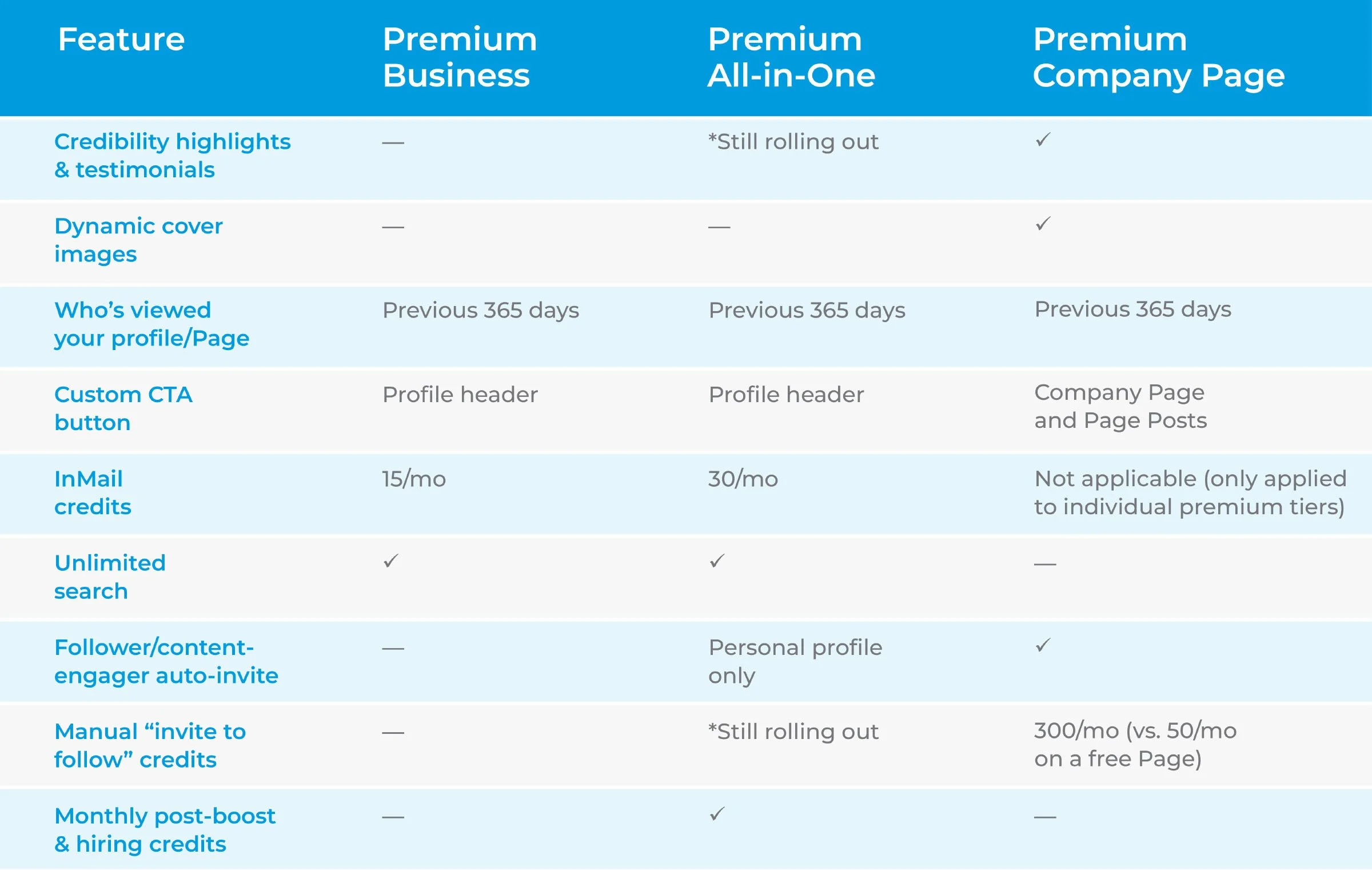
LinkedIn positions it as a way to increase followers, visibility, engagement and leads. In practice, whether it delivers on those goals depends heavily on what your company is already doing on LinkedIn. There’s also overlap among LinkedIn’s Premium offerings, so it’s worth understanding what you are actually buying before adding another subscription.
The Features We Actually Find Useful
Not every Premium feature carries the same weight. After using the product on active Company Pages, a few stand out because they support what marketers are already trying to accomplish: building an audience, understanding what resonates and turning engagement into action.
Turn Content Engagement Into Audience Growth: This is probably the Premium feature we find most useful. When someone engages with your Company Page content, LinkedIn can automatically invite that person to follow the Page. Because those invitations aren’t limited to first-degree connections, companies can turn people who have already shown some level of interest into an audience they can continue reaching. For a company posting content consistently, that’s a real advantage.
Be More Deliberate About Who You Invite: Premium increases the number of manual “invite to follow” credits to 300 per month, compared with 50 on a standard page. With advanced filter capabilities, companies can be more deliberate about who they invite. For example, marketers can filter by industry to identify people who are more likely to fit the audience you want to reach. This can be valuable for a financial services firm where a smaller, highly relevant following can be much more useful than a large but disconnected audience.
Understand How You’re Performing Against the Market: Competitor insights is another feature we pay attention to. Premium allows a Page to track up to nine competitors and see information including follower growth, posting volume, comments, reactions and trending posts.
Follower counts alone don’t tell you much about whether your marketing is working. But looking at your performance in context can be useful. Are competitors posting more frequently? Are they growing faster? What types of posts are generating engagement? Is your Page gaining ground even though you started with a smaller audience? Those are much more useful marketing questions than simply asking whether your follower count increased this month.
Give Engagement Somewhere to Go: Premium also gives companies more options for engaging with Page traffic. The custom CTA appears beneath the company name on posts in the feed, not just on the Company Page itself. That means someone can encounter the CTA while viewing your content without ever intentionally visiting your Page.
Testimonials and dynamic cover images provide additional opportunities to reinforce positioning, highlight a campaign or put client proof in a prominent location.
None of these features will transform a LinkedIn program individually. Together, however, they create more ways to move someone from seeing your content to engaging with your company to following your Page to taking another action.
Premium Isn’t the LinkedIn Strategy
This is where we think companies get LinkedIn wrong. A Company Page is only one part of a successful LinkedIn presence, particularly in financial services. People tend to engage with people, which means executive visibility, employee engagement, and individual networks can play an important role alongside the company brand.
Consider what happens when those pieces work together. Your company publishes a useful perspective on an issue affecting private funds. A subject matter expert expands on it from their personal profile. Employees engage with and share the content, extending its reach into their own networks. Prospects begin interacting with the company’s posts. Premium helps convert some of those engaged users into Page followers, while a visible CTA provides a path to learn more.
We’ve seen the opposite as well. Turning Premium on for a Page that isn’t posting consistently doesn’t suddenly create momentum. A steady flow of new visitors means little if there isn’t relevant content waiting for them, and more invitations won’t help much if people don’t see a reason to follow.
What Happened When We Put It to Work
We have some firsthand evidence of what that can look like. For one financial services client that was already publishing content consistently, activating the manual invite feature helped accelerate follower growth by more than 200% during the first two months, building on the organic momentum the company’s content had already established.
Using Competitor Insights to put the performance into context revealed something else. The client outpaced every competitor LinkedIn was tracking for percentage follower growth during the same period, despite beginning with the smallest follower base in the group. The CTA gave us another measure. Over a three-month period, clicks increased 44.4%.
Those numbers need an important qualifier. We don’t attribute the results to one Premium feature. They came from using several features alongside consistent content and ongoing organic engagement. And that’s precisely the point. Premium gave us additional tools to amplify a marketing program that was already active.
So, Is LinkedIn Premium Company Page Worth It?
Rather than asking whether Premium is “worth it,” we'd ask a few different questions. Are you publishing consistently? Are the right people engaging with your content? Are you actively trying to grow your Company Page audience? Do you have a reason for someone to follow once they discover you? And is there a clear next step for someone who wants to learn more?
If the answer to most of those questions is no, Premium probably isn't the first thing to address. There may be more fundamental opportunities within your content, positioning, or engagement strategy. If those pieces are already in place, Premium becomes much more interesting.
The easiest way to find out is to test it. Take advantage of the free trial, establish a baseline for follower growth, engagement, Page traffic and CTA activity, and compare performance while you're actively using the Premium features. If you're already subscribed, run the same exercise periodically rather than allowing the subscription to become another automatic marketing expense.
The bigger lesson from our experience isn't really about Premium at all. LinkedIn tends to work better when the individual pieces reinforce one another: relevant content creates engagement, people extend the reach of that content, engagement builds the company audience, and that audience creates more opportunities to stay visible with the people you want to reach.
Premium can help that system work harder. But the strategy still has to come first.
If you have questions about how to get more out of LinkedIn, reach out to us here.